Paranormasight: The Mermaid's Curse Review
So recently the second installment of the Paranormasight series dropped kind of out of nowhere. While there were speculations on a possible sequel to Paranormasight: The Seven Mysteries of Honjo, Square Enix were super tight lipped until three weeks ago when the trailer for the sequel dropped and the game released like a week after. I did like the first one overall, so I was pretty hyped to play the sequel, titled Paranormasight: The Mermaid’s Curse. But did it live up to the hype for me? Were the things I found lacking in the original improved in the sequel? Well, that’s what were are here to discuss!
In this blog post, I’ll be reviewing the sequel and comparing it to the first game. We’ll be discussing the mystery, the premise and atmosphere, the characters, the mastermind, and the ultimate ending. As a warning, there will be FULL SPOILERS for both Paranormasight: The Seven Mysteries of Honjo and Paranormasight: The Mermaid’s Curse so if you don’t want to get spoiled, this is your opportunity to leave. Also, it might be a bit confusing to read this blogpost if you haven’t played those games as I do assume you have knowledge of their stories in writing this post. If you are still reading this, I assume you are okay with that. Without further ado, let us begin!
The Mystery
To start, let’s talk about the driving mysteries. Paranormasight: The Mermaid’s Curse follows four main PoVs, similar to the first game, as they investigate some mysterious, paranormal events. Unlike in the first game where there is one main paranormal thing which is the Rite of Resurrection, this time there are three main throughlines. The first being mermaids and Yuza’s desire to find one, the second being the Curse of Raging Waves being unsealed and the cast trying to undo the curse, and the third being a series of murders done using the Curse of Tomoshige. As we progress through the game and investigate, it turns out that those three events are connected in the distant past. Those three events were the result of the actions of two people who were immortal and lived through history. However, in present time, they are three separate distinct problems our characters need to deal with. Functionally, even if they share the same roots in the past, from a story perspective they are different throughlines.
This is one aspect where I feel the first game was better at. The first game had a single central mystery, that being the Rite of Resurrection and who is the mastermind that started it. Because of that, there was more focused tension on trying to investigate the Rite and who the mastermind is. There is a lot more cohesion with the PoV characters and their motivations. And as things come to a head, because there is a central problem, things build up a lot more effectively to the climax and it is really engaging trying to sus out who could be responsible for this. In the sequel, there’s a bit of whiplash as we go from one problem to the other and while it was engaging to figure out that it was connected in the backstory, we still have three objectives at present in the end. Those three objectives feel less fleshed out and kind of felt like they were “on the side” compared to the first game’s all-encompassing central mystery. There was less of a sense of importance and impact, less cohesion, and the tension was just not as strong or consistent.
Related to that, because there were three separate throughlines, there is less of a sense of trying to find the mastermind. Honestly, saying this game has a mastermind is kind of a stretch. The first objective, Yuza finding a mermaid, is not an antagonistic conflict at all. The second objective, the Curse of Raging Waves, is more of a conflict against nature than one with an active antagonist. It’s only the third objective where we have an active “bad guy”, Kippei Ikoma, and because of that it feels a bit hollow when we have that “reveal”. While Kippei is one of the two immortals whose actions in the past did cause the three problems, the first two are more incidental. It’s only the third problem where he is actively plotting and doing stuff. Contrast this to the first game where because there is only one central mystery, you are immediately engaged with who could be the cause. That’s not the say the first game did this successfully in the “reveal” mind you (it definitely did not), but it’s just that as you are going through the story, there is more engagement on who the mastermind can be.
Premise and Atmosphere
While both games resemble each other and share certain story elements, they have different premises. The first game is all about the Rite of Resurrection where a certain number of people receive Curse Stones and by killing the other Curse Stone holders, they can fill their own stone with more and more power until they have enough to revive someone they wish. This premise immediately creates a “Battle Royale”-esque conflict where the participants are pitted against each other. Meanwhile, the premise of the second game is generally about investigating the mysteries of the mermaids and the curses that are going on. It has a more investigative premise as opposed to the “killing game” one. Personally, I much prefer the premise of the first game. I’m always a huge fan of “killing game” scenarios like Danganronpa as it lends itself well to a lot of conflict, drama, plotting, tension, suspicion, and high emotions between the cast. Characters are often active in furthering their positions, trying to get an edge, scheming, or just trying their best to survive. It creates an atmosphere of distrust and suspicion which is very engaging for a mystery. The stakes feel a lot higher. Meanwhile, the premise of the second game feels a lot more reactive. Characters generally react to the paranormal events instead of being active participants. They are trying to find a mermaid, or lift a curse, but there’s not as much drama or tension that you get when you are in a situation where other characters may be after you. There’s not this sense that you have to outwit or outlast the other characters to “win”. While the consequences of failing are still high, arguably higher than the first game, it doesn’t feel that way due to the more reactive premise.
Related to this, the atmosphere of the first game is also a lot better in my opinion. The first game had a very effective horror aesthetic and dark atmosphere that really sells the paranormal vibes of the Rite of Resurrection. As you are playing the game, the dark and foreboding atmosphere perfectly conveys a sense of danger at every corner, whether it comes from the paranormal or from the other participants. You can never really let your guard down and it makes the Rite of Resurrection feel all-encompassing and claustrophobic. You are always on edge and the tension is phenomenal. As for the second game, there are certainly still some horror aesthetics and moments, but it definitely was not as prevalent as the first. The overall atmosphere is a lot brighter, being set on an island and the nearby beaches as opposed to the dark city of the first game. There seems to be more of a vibe of adventure in trying to find the mermaid or the solutions to the problems as opposed to a vibe of horror and claustrophobia. Because of that, I definitely felt it was less engaging in the second game. The investigations were still really cool to figure out the mysteries, but it did not have the same level of tension as the first.
Characters
In terms of the characters, I think the second game did a really good job of fleshing out and developing the characters overall. I particularly liked Yuza’s and Sato’s PoVs. Sato was immediately compelling at the beginning with her arriving at the island only three months ago and her memory before that is spotty to non-existent. We eventually figure out that she is an 800-year immortal who, to put it shortly, has been through it. I find her sorrow at her sacrificing herself 400 years ago to seal the Curse of Raging Waves and awakening now with only a couple days left to live when the game starts to be very compelling and emotional. It is tragic that despite her long life, she never was able to live a life of her own due to the time period and her sacrifice. And when she is unsealed three months ago and finally able to live her own life, it is so short. Seeing how she thinks when she knows she has such a limited time left, what she does to be considerate of the fact that she’ll be gone to others, and her willingness to sacrifice herself to stop further tragedies, it is so good. Sato’s character was the highlight for me.
Yuza was a character I initially found bland. At first, he seemed pretty standard and didn’t really stand out, but once we get into the ultimate ending, he rapidly rose in my favorites list. Seeing him struggle at being ostracized by the island’s community to point where it is implied he tried to commit suicide, him realizing then that he became an 800-year immortal 5 years ago when he was saved by a mermaid, and his drive to allow Sato to finally be able to live a life of her own, I find all of that super compelling, which I was not expecting from Yuza at the beginning when all we knew was that he was searching for a mermaid.
The rest of the characters were stellar as well. Yumeko I really liked and it was cool to have that slow realization that she was a mermaid that became human for love. Avi was a character I don’t have too many deep thoughts of, but he was certainly fun and had his moments as well, like with Somekawa where he grants her wish of dying as a mermaid. And that’s not even talking about the rest of the cast, who were all fun and compelling in their own ways. It was going to be hard to match the first game in terms of the character writing, but I think the second game was able to accomplish it. The cast of characters was as stellar!
The Mastermind
As I mentioned above, there isn’t really a central all-encompassing “mastermind” in this game. The closest character that can be considered a “mastermind” would be Kippei Ikoma. But as mentioned above, he’s really only actively engaged with one of the mysteries that the cast has to deal with, so his impact as an antagonist is definitely reduced. In addition, I don’t personally find Kippei to be a compelling mastermind. If you read my blogpost about Danganronpa and its masterminds, you know that in general I find the most compelling masterminds to have a connection with the protagonist, emphasize the themes of the work, and to have a compelling motivation. The thing is, Kippei can check off those boxes. He has a real personal connection with Sato, them previously being together in the past and them being 800-year immortals. He emphasizes the themes of the passage of time with immortality, him being stagnant and consumed with revenge and rebuilding his clan while Sato has learned to move on and grow. The thing is though, because this game was split with three separate throughlines, these aspects were not as deep or developed. Honestly, it is mainly in the Files that we learn about all of that. There’s not as much focus in the actual narrative and thus it didn’t hit as hard. And finally, I think they bungled the motivation hard. In theory, Kippei could have a compelling motivation of having spent 800 years in struggle only to realize near the end of his life that he was unable to accomplish anything, and him finding out Sato is alive and him wanting to die with her, that all could be super compelling. Unfortunately, this falls flat because Kippei is just way too unlikable and his “love” is way too shallow and entitled to really be effective. I think playing up the tragedy instead of making Kippei have like no redeeming qualities would have been better.
A big problem with Kippei is also that he doesn’t really have a lot of screen time. I think there are literally one or two scenes with him before the climactic moment. Because of this, there is not a lot of build up to Kippei and the reveal, which makes the reveal lose its impact. We never really feel his presence in the game, he doesn’t really have a dynamic with any of the cast, and overall he is really out of focus. This may be due to the fact that there are three separate throughlines and Kippei is only actively engaged with one of them, but it’s not like the first game did this any better. I feel like masterminds are this series’ weak point as the first game’s mastermind, Yoko Fukunaga, was also pretty bad. She literally gets no screen time besides the prologue and one super small scene near the end. There isn’t even a confrontation with her. Her entire motivation, backstory, connection, etc. is solely delivered in the Files. Which is super lame by the way. There was no build up, no development of a dynamic, no presence, nothing. I will say, I do think the sequel did a marginally better job with the mastermind as at least there was a confrontation and Kippei had some screen time to develop a dynamic and stuff, but it was definitely a low bar to cross.
The Ultimate Ending
If there is one thing about the second game that is way and above better than the first, it would definitely be the ultimate ending. The ultimate ending of the second game absolutely clears the ultimate ending of the first game. In the first game, the ultimate ending basically has you navigate the flowchart to go to the prologue and essentially retcon everything that happened in the game to one where the mastermind, Yoko, is killed in the beginning and the events we experienced did not happen to get a “golden ending”. I hate this ending a lot. Not only does it completely undo everything we actually did in the “main” storyline, many characters don’t get the same closure that they did in the “main” storyline. All the build up, the development, and the growth of the characters and their journey gets erased, and the mastermind is killed before they have any real screen time.
The second game’s ultimate ending is just so much better. For starters, nothing is undone or retconned. So, you know, starting off strong. Instead of that, the ultimate ending of the second game first reveals scenes that happened a month prior, where Yuza and Sato begin to bond over their immortality. It is very dangerous to include a romantic development in the 11th hour, but the writing and their chemistry was just so good that it worked so well. This leads to another recollection just a day before the events of the game where it is revealed that they are going to fight against the fact that Sato is slated to die in two days, and have her be immortal again by finding the mermaid, and that they will work together to do so. This completely recontextualizes the events of the game in a way I think is really brilliant. Some of the idiosyncrasies that I noticed in my playthrough before now started to click. I mentioned above that I initially found Yuza to be bland, but this recontextualization made me find him very compelling. And with this knowledge, you are able to make key decisions towards the end that allow Sato to stay alive and for them to be together. It is so heartfelt and compelling. The different decisions didn’t erase anything that happened in the game, but it did allow you to reach a different ending where instead of Sato spending her last day in life making good memories before dying, we get an ending where Sato is able to survive and be with Yuza for the 800 years they now have. This works so much better. It keeps all of the build-up, development, and growth we see in the “main” storyline while recontextualizing it with this new knowledge of the recollections that make it even deeper. It is just so much more satisfying and rewarding.
Conclusion
So, with all that being said, what are my overall thoughts on Paranormasight: The Mermaid’s Curse? To put it simply, I think that overall, I did find the mystery, the premise, and the atmosphere to be weaker than the first game. I think the first game did a much better job in those aspects. However, the core of the experience with the characters is just as top notch and the weakness regarding the mastermind is still present. That being said, the ultimate ending was so much better and so much more satisfying. Ultimately, I think I would have to give it the same score as I did the first game: 4/5 and an A ranking.
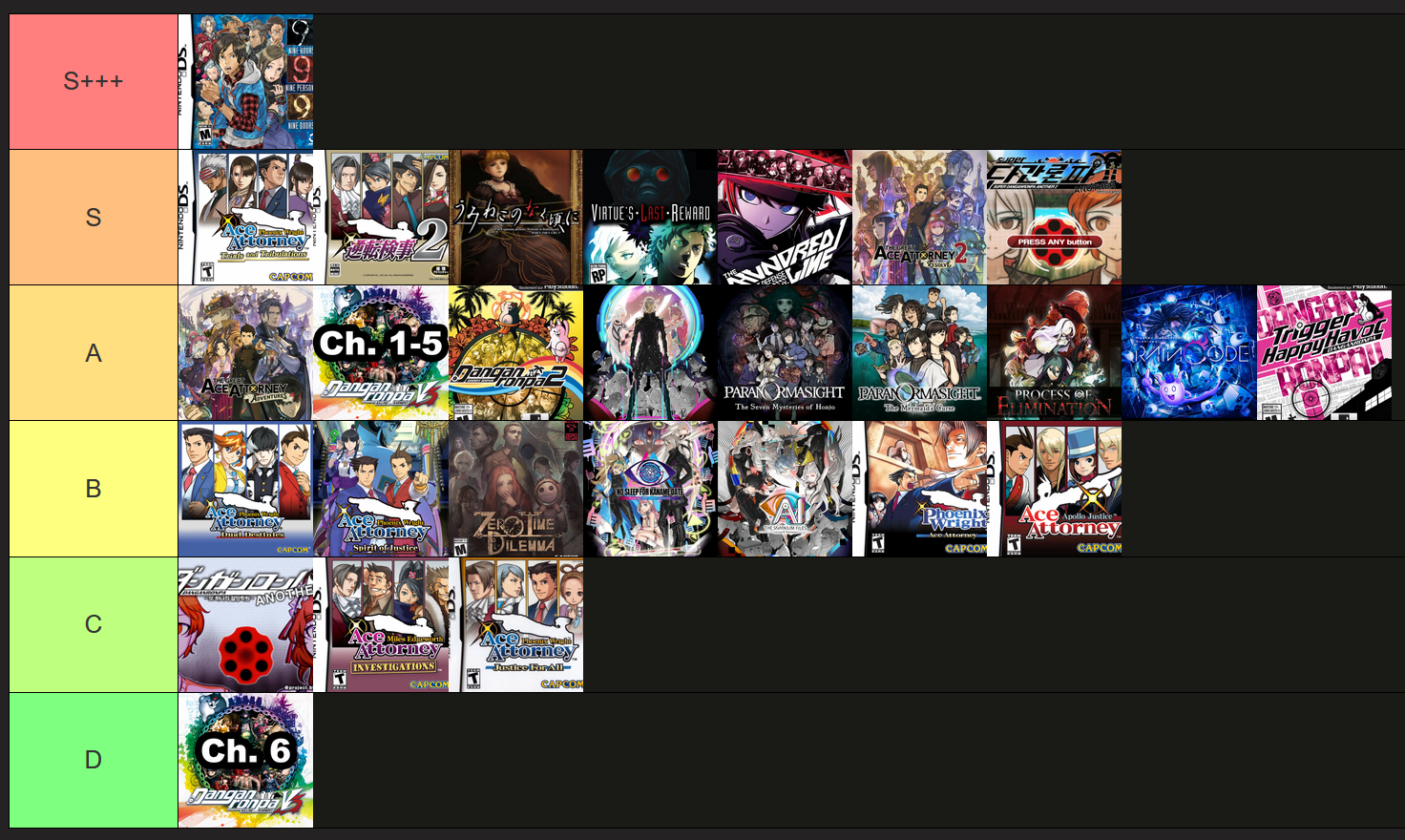
It’s interesting how the flaws I found in the first game regarding its ultimate ending were fixed in the second, but in return the other aspects of the story are weaker. I need them to do a fusion dance for the third game if there is going to be one. Ultimately, I did really enjoy playing this game and I thought it lived up to the first game well enough. I would recommend it and the first game to any fan of mystery games. Hopefully you enjoyed hearing my thoughts on this series! Thank you so much for reading and hope you have an amazing rest of the day!